
From Body Camera to Courtroom: Can You Trust the Digital Evidence?
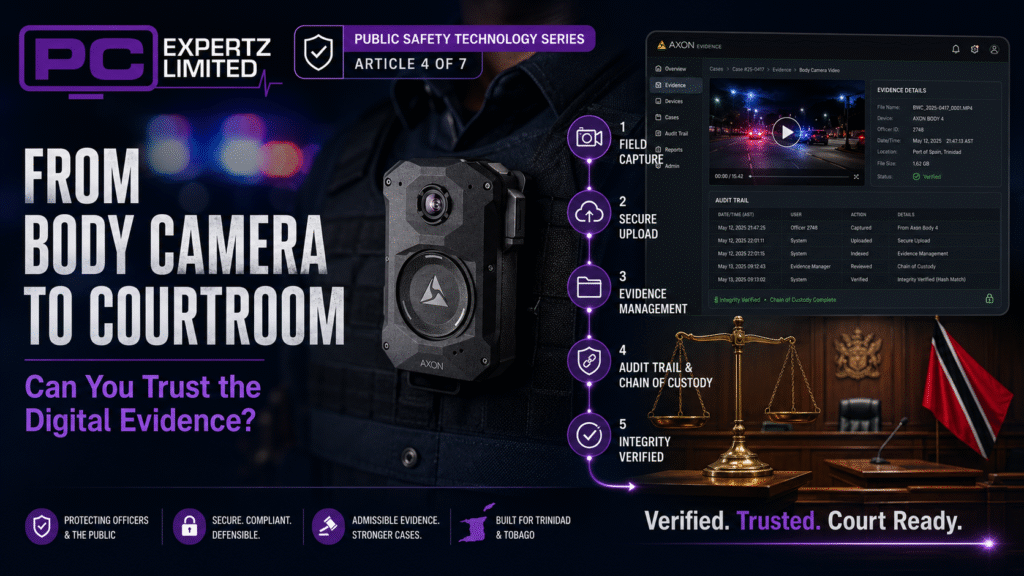
This is the fourth article in the PC Expertz Public Safety Technology Series. In our previous article, we explored how body cameras can protect both police officers and members of the public. That protection, however, depends on one important condition: people must be able to trust the evidence.
A body camera may clearly capture an incident, but the recording can later become part of an investigation, complaint or legal proceeding. At that stage, the digital evidence chain of custody becomes just as important as the video itself. The question is no longer only what the camera recorded, but also what happened to that recording afterwards.
What Is a Digital Evidence Chain of Custody?
A chain of custody creates a documented history of evidence from the moment of capture. It follows that evidence as authorized personnel store, access, review or share it. This helps establish a clear record of how the evidence moved through the system.
With physical evidence, investigators may document who collected an item and where they stored it. Digital evidence follows the same basic principle, but technology can automate much of the process. A modern evidence system can record when it receives a body-camera file, who accesses it and what actions they perform.
Why Audit Trails Matter
An audit trail records activity surrounding a piece of digital evidence. This creates accountability without relying only on someone remembering what happened. It can show who viewed footage, when they accessed it and whether they shared or managed the recording.
That history becomes especially important during investigations or legal proceedings. If questions arise about how evidence was handled, the audit trail can help provide answers. In this way, the system creates a record around the evidence itself.
Protecting the Original Recording
One of the most important principles in digital evidence management is protecting the integrity of the original file. Organizations need confidence that the recording reviewed later represents what the camera originally captured.
Modern systems can use technical safeguards to detect unexpected changes to files. One method creates a unique digital fingerprint for a recording. If the file changes, that fingerprint also changes, which provides another way to check evidence integrity.
The technical details happen mostly behind the scenes, but the purpose is simple. The system helps demonstrate that the evidence remains trustworthy from capture through review.
Access Control Protects the Evidence
Strong evidence management also requires control over who can access recordings. Not every employee needs access to every piece of footage, especially when recordings may contain sensitive information.
Organizations can assign permissions according to roles and responsibilities. Investigators, supervisors and other authorized personnel may each receive different levels of access. This reduces unnecessary exposure while also creating clearer accountability for who interacted with the evidence.
Access control therefore supports both cybersecurity and evidence integrity. It helps ensure that the right people can access the evidence without opening it to everyone.
Secure Sharing Matters Too
Digital evidence may sometimes need to move beyond the original department. Investigators, prosecutors or other authorized parties may require access as a case progresses.
A secure evidence platform can provide structured methods for sharing footage while maintaining records around that activity. This provides a stronger process than creating uncontrolled copies or moving important evidence through informal channels.
The objective is not to make evidence difficult to access. Instead, the goal is to make authorized access practical while maintaining control, security and accountability.
From Video File to Evidence
A recording can contain powerful information, but the video alone does not automatically create trust. The surrounding process matters just as much.
A clear digital evidence chain of custody, controlled access, audit trails and integrity safeguards all support confidence in the evidence. Together, these systems help show how the recording was managed after the camera captured it.
This becomes especially important when the evidence may influence an investigation or legal proceeding. The more clearly an organization can account for its evidence, the stronger the foundation for trusting it.
Technology and Procedure Must Work Together
Technology can automate many controls, but it cannot solve every evidence-management challenge on its own. Organizations still need clear policies, trained personnel and consistent procedures.
For example, technology may record who accessed evidence, but policy determines who should have access in the first place. A system may help verify file integrity, but procedure determines how people manage that evidence throughout its lifecycle.
The strongest approach combines both. Technology provides the controls, while governance defines how those controls should be used.
Why This Matters for Officers and the Public
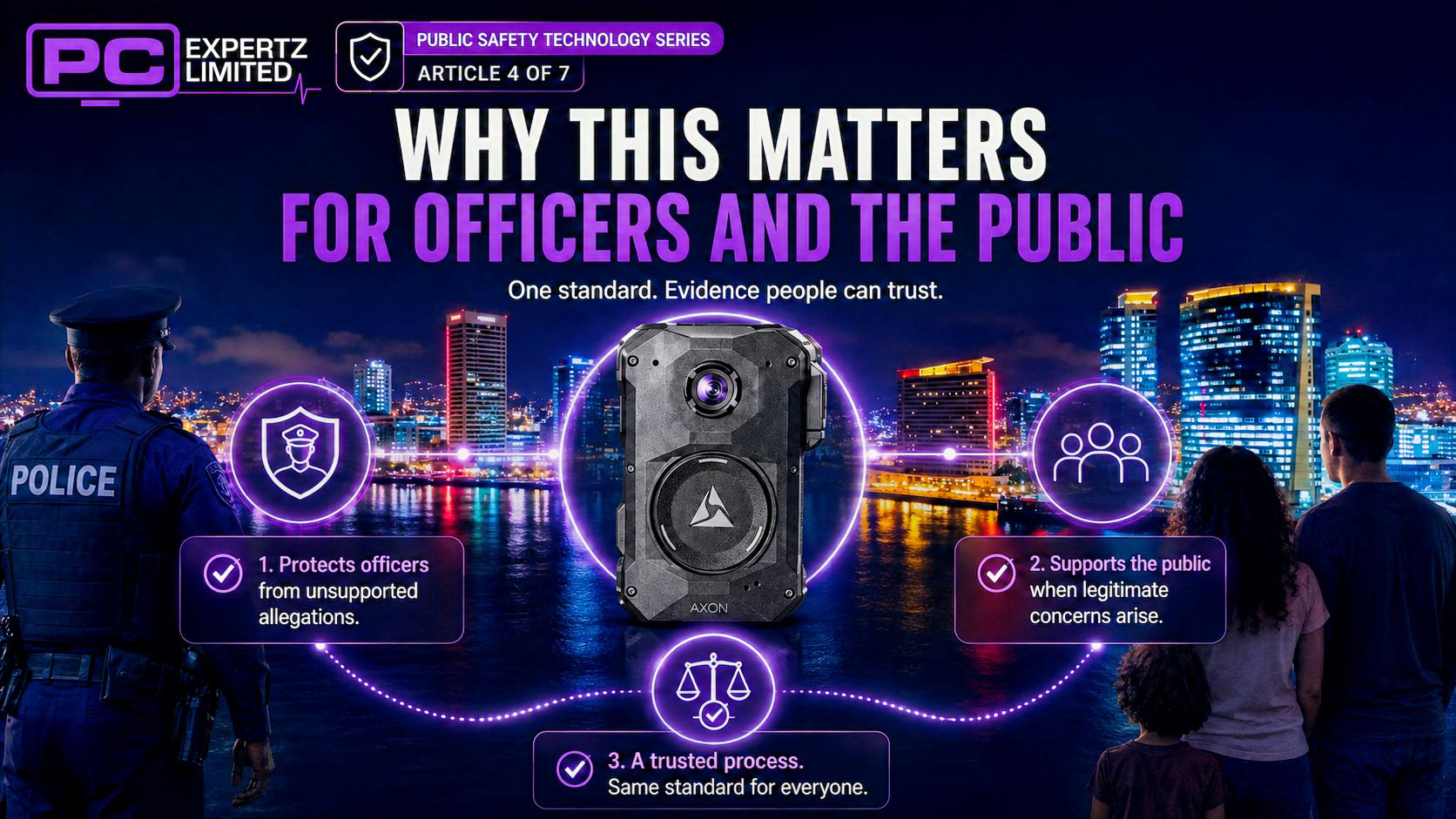
Evidence integrity should not favor one side of an incident. If footage supports a complaint, investigators need confidence in that recording. If the same evidence supports an officer’s account, the standard should remain the same.
That consistency matters because reliable evidence can protect everyone involved. It can help protect officers from unsupported allegations while also supporting members of the public when the evidence raises legitimate concerns.
The value comes from having a process that people can trust, regardless of what the recording ultimately shows.
The Trinidad and Tobago Context
As body-worn camera technology continues to develop, the conversation in Trinidad and Tobago can extend beyond the camera itself. The public may see the device on an officer’s uniform, but the credibility of the resulting evidence depends heavily on the systems operating behind it.
Secure storage, controlled access, audit trails, evidence integrity and clear policies all contribute to that environment. These elements help explain why digital evidence management has become such an important part of modern public safety technology.
For the wider public, understanding this process is also useful. It shows that trustworthy body-camera evidence depends on much more than simply pressing record.
Can You Trust the Digital Evidence?
A body camera can capture an important moment, but the journey from that moment to an investigation or courtroom may involve many steps. A strong digital evidence chain of custody helps document those steps while audit trails provide accountability.
Access controls protect sensitive information, while integrity safeguards help establish confidence in the original recording. Together, these controls help transform video into evidence that people can manage, review and trust.
The camera captures what happened. The evidence system helps demonstrate that the story remained intact.
In the next article in our PC Expertz Public Safety Technology Series, we will examine a different challenge: what happens when hundreds or thousands of body cameras begin producing thousands of hours of video?
Navigation Links
Part 1: Body Cameras Are Changing Public Safety. But the Camera Is Only Half the Story.
Part 2: What Happens to Body-Camera Footage After an Officer Stops Recording?
Part 3: Can Body Cameras Protect Police Officers Too?
Part 4: From Body Camera to Courtroom: Can You Trust the Digital Evidence?
Part 5: What Happens When Thousands of Hours of Body-Camera Video Start Piling Up?
Part 6: AI and Body Cameras: The Next Stage of Digital Evidence
Part 7: What Should Trinidad & Tobago Expect From a Modern Body-Worn Camera Programme?
WhatsApp: +1 (868) 798-9762
Email: admin1@pcexpertz.com
Website: pcexpertz.com