
AI and Body Cameras: The Next Stage of Digital Evidence
This is the sixth article in the PC Expertz Public Safety Technology Series. In our previous article, we looked at what happens when body cameras create thousands of hours of video. Storage is part of the challenge, but finding the right evidence can become even more difficult.
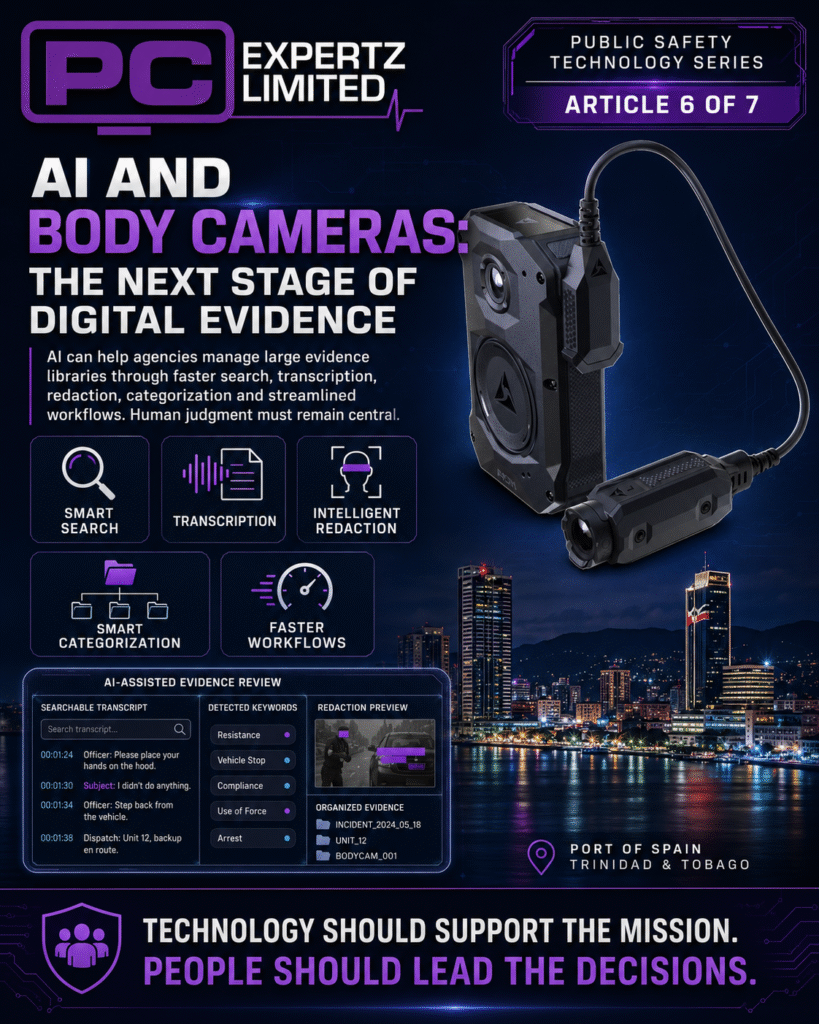
This is where AI in body camera evidence management may become increasingly useful. Artificial intelligence can help organize large evidence libraries, identify relevant information and reduce repetitive administrative work. However, AI should support investigators and evidence teams, not replace human judgment.
The Problem Is No Longer Just Recording Video
Modern body-worn cameras can produce large amounts of digital evidence. As deployments grow, agencies may need to manage thousands of recordings from different officers, incidents and locations.
Simply storing those files is not enough. Investigators need to find the right footage when they need it. Supervisors may also need to review incidents, respond to complaints or prepare evidence for other authorized parties.
As a result, the challenge gradually shifts from capturing video to understanding and managing it.
AI Can Help Search Large Evidence Libraries
Search may become one of the most important uses of AI in body camera evidence management. Traditional systems can already organize recordings by details such as officer, date, time or case number. AI can potentially add another layer to that process.
For example, AI-assisted tools may help identify words within transcripts or group recordings around specific information. This can reduce the amount of footage a person must review manually.
The objective is not to let software decide what happened. Instead, the technology can help investigators narrow thousands of recordings into a smaller and more useful set.
Transcription Can Make Video Easier to Review
Body-camera footage contains more than images. Conversations, instructions and other audio can also become important during an investigation.
Automatic transcription can convert spoken words into searchable text. Investigators can then search a transcript instead of manually moving through a long recording to locate a particular conversation.
This can save time, especially when teams need to review several recordings from the same incident. However, transcription should remain a supporting tool. Background noise, accents and overlapping voices can affect accuracy, so important information may still require human review.
Categorization Can Reduce Administrative Work
Evidence management involves significant administrative work. Someone may need to associate recordings with cases, incidents or other records.
AI can potentially assist with this process by recommending categories or helping organize evidence according to available information. This can make large digital libraries easier to manage.
However, agencies still need clear workflows. AI can suggest where evidence belongs, but authorized personnel should remain responsible for important decisions.
That distinction matters because automation should improve the process without removing accountability.
Redaction Can Become Faster
Body-camera footage may capture faces, licence plates, documents or other sensitive information. Before agencies share certain recordings, they may need to obscure some of that information.
Manual redaction can take significant time, especially when an object or person moves throughout a video. AI-assisted tools can help identify and track items that may require redaction.
This can reduce repetitive work, but people still need to verify the result. A system may miss something important or hide information that should remain visible.
Therefore, AI can make redaction faster, while human review helps ensure that it remains accurate.
Faster Review Does Not Mean Less Oversight
Efficiency is one of the strongest arguments for using AI with digital evidence. However, faster processing should never mean weaker oversight.
An AI system may help identify a relevant clip, generate a transcript or suggest a category. It should not automatically determine guilt, credibility or the meaning of an incident.
Context remains essential.
A few seconds of video may look very different when investigators review the minutes before and after it. Witness statements, CCTV footage and other evidence may also provide information that an automated system cannot fully understand.
AI should therefore help people reach the evidence faster. People must still evaluate what that evidence means.
AI Can Help With Administrative Workflows
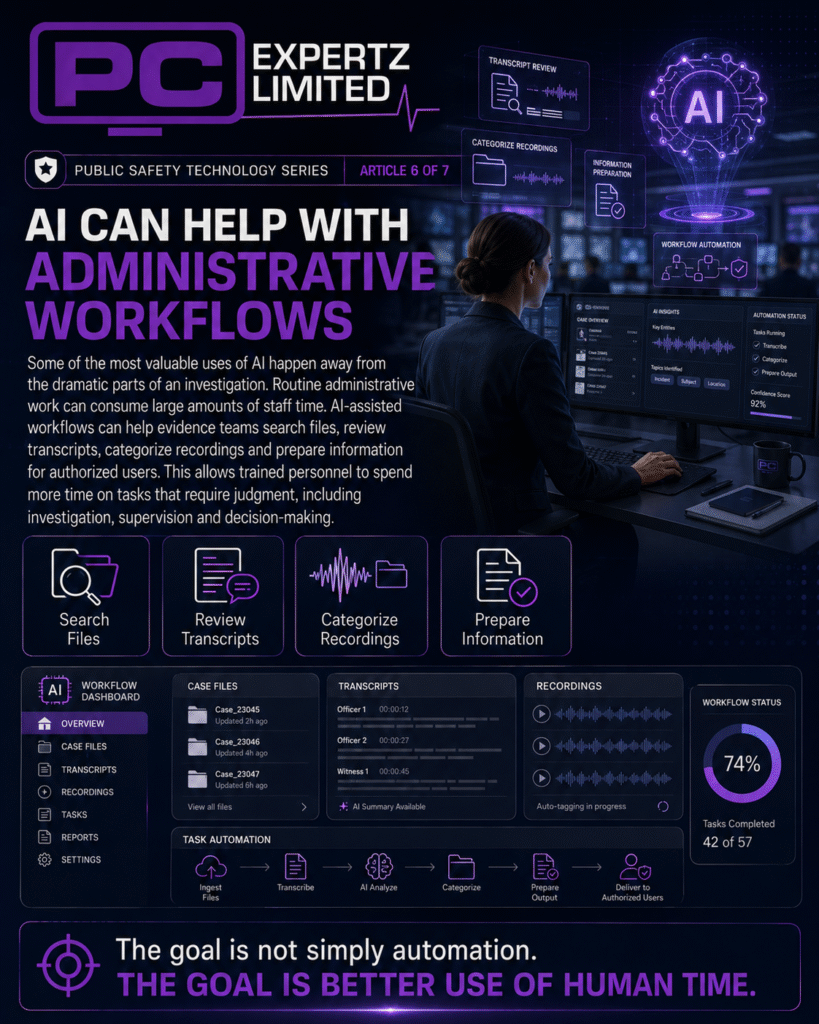
Some of the most valuable uses of AI may happen away from the dramatic parts of an investigation. Routine administrative work can consume large amounts of staff time.
Evidence teams may need to search files, review transcripts, categorize recordings and prepare information for authorized users. AI-assisted workflows can help reduce some of that repetitive work.
This matters because technology can free trained personnel to spend more time on tasks that require judgment. In public safety, that can include investigation, supervision and decision-making.
The goal is not simply automation. The goal is better use of human time.
Cybersecurity Still Matters
Adding AI does not remove the need for strong cybersecurity. In fact, it may make security even more important.
Body-camera evidence can contain sensitive information about officers, victims, witnesses and members of the public. Any AI system that interacts with that information must operate within the same controlled evidence environment.
Access permissions, audit trails and data protection therefore remain essential. Agencies also need to know who can use AI functions and what those tools can do with the evidence.
AI should become another controlled part of the evidence system, not a shortcut around it.
Human Judgment Must Remain Central
Artificial intelligence can process information quickly, but speed does not equal understanding. Public safety decisions can involve context, law, policy and human behaviour.
For that reason, AI in body camera evidence management should remain an assistive technology. It can help search, organize and process information, while trained personnel remain responsible for interpretation and decisions.
This approach also strengthens accountability. If AI contributes to a workflow, organizations should still understand how people use its output and who remains responsible for the final decision.
The technology should make the process clearer, not less accountable.
What This Could Mean for Trinidad and Tobago
For Trinidad and Tobago, the potential value of AI may become more visible as digital evidence libraries grow. Larger deployments can produce more footage than people can realistically review manually.
AI-assisted search, transcription, categorization and redaction could help make those evidence libraries easier to manage. In turn, investigators may spend less time searching for information and more time examining the evidence that matters.
However, technology should develop alongside policy, cybersecurity and training. A powerful AI tool still needs a secure and well-managed environment around it.
The strongest approach will combine technology with clear human responsibility.
The Next Stage of Digital Evidence
Body cameras changed the way public safety agencies capture incidents. Digital evidence platforms changed the way organizations store and manage those recordings.
AI may represent the next stage.
Used carefully, AI in body camera evidence management can help people search larger evidence libraries, create transcripts, support redaction and reduce administrative work. Most importantly, it can help authorized users reach relevant evidence faster.
But AI should not become the judge of what happened.
The technology can help find the evidence. People must still understand it.
In the final article in our PC Expertz Public Safety Technology Series, we will bring the entire discussion together: What Should Trinidad & Tobago Expect From a Modern Body-Worn Camera Programme?
Navigation Links
Part 1: Body Cameras Are Changing Public Safety. But the Camera Is Only Half the Story.
Part 2: What Happens to Body-Camera Footage After an Officer Stops Recording?
Part 3: Can Body Cameras Protect Police Officers Too?
Part 4: From Body Camera to Courtroom: Can You Trust the Digital Evidence?
Part 5: What Happens When Thousands of Hours of Body-Camera Video Start Piling Up?
Part 6: AI and Body Cameras: The Next Stage of Digital Evidence
Part 7: What Should Trinidad & Tobago Expect From a Modern Body-Worn Camera Programme?
WhatsApp: +1 (868) 798-9762
Email: admin1@pcexpertz.com
Website: pcexpertz.com