
Can Body Cameras Protect Police Officers Too?
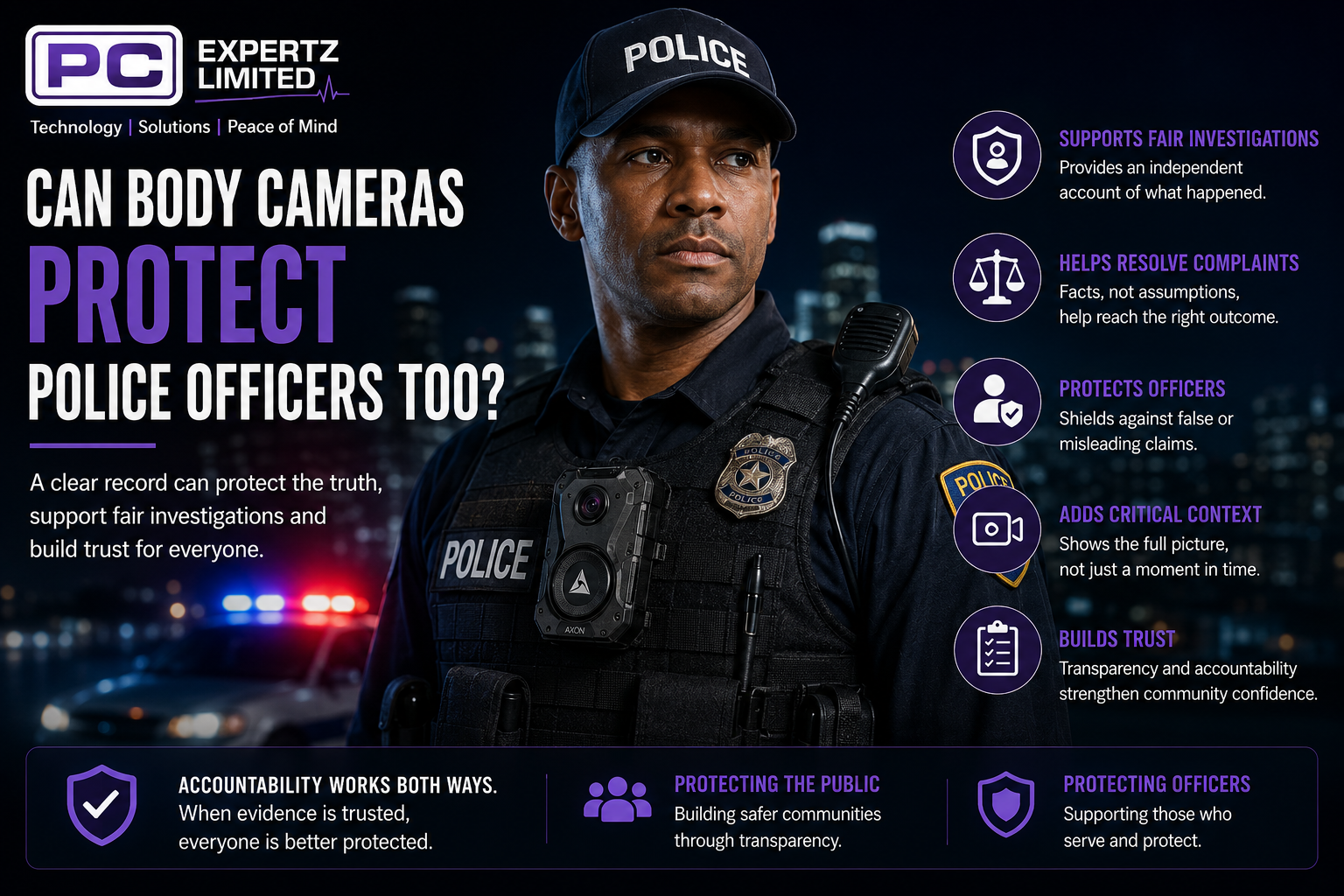 This is the third article in the PC Expertz Public Safety Technology Series. So far, we have looked at the technology behind body-worn cameras and followed footage into digital evidence management. Now, we turn to another important part of the discussion: how body cameras can protect police officers as well as the public.
Body-worn cameras are often associated with accountability and transparency. Those are important benefits. However, accountability works in more than one direction. A reliable video record can also provide officers with valuable evidence when questions arise about an encounter.
A Record of What Actually Happened
Police officers regularly work in situations that can develop quickly. An encounter that begins as a routine interaction can change within seconds. Afterwards, officers, witnesses and members of the public may remember the event differently.
This does not necessarily mean that someone is being dishonest. Stress, movement, noise and limited visibility can all affect how people remember an incident. A body-worn camera provides another source of information that investigators can review.
Video will not always capture every angle or answer every question. However, it can provide important context about what the officer saw and heard during an encounter.
Body Cameras and Complaints
Complaints against police officers require careful investigation. Without video evidence, investigators may sometimes need to compare different accounts of the same incident.
Body cameras for police officers can provide additional evidence during that review. The footage may support a complaint, contradict an allegation or show that the situation was more complex than either account suggested.
This benefits everyone involved. Members of the public gain another source of evidence when raising legitimate concerns. At the same time, officers gain a digital record that can help address allegations that the evidence does not support.
The technology does not decide who is right or wrong. Instead, it gives investigators more information to consider.
Context Can Make a Difference
A short video clip or description of an incident may not always tell the complete story. What happened immediately before an encounter can provide important context for what happened next.
Body-worn cameras can help preserve more of that timeline. Investigators may review the officer’s actions, instructions, surrounding environment and other circumstances connected to the incident.
That context can matter when people later evaluate an officer’s decisions.
However, body-camera footage should remain one part of a wider evidence picture. Investigators may also consider witness statements, CCTV footage, physical evidence and other available information.
Protecting Evidence Protects Everyone
The recording itself is only useful if people can trust the systems that manage it.
As we discussed in Article 2, a digital evidence platform can control access and maintain audit trails. It can also organize recordings and help authorized personnel retrieve them when required.
These controls protect more than the video file. They help protect the integrity of the process surrounding that evidence.
For an officer facing a complaint, this can become particularly important. A secure record of the incident has greater value when the system can also show how people handled that evidence afterwards.
The same principle protects members of the public. A trustworthy evidence process should work consistently regardless of whose actions investigators need to review.
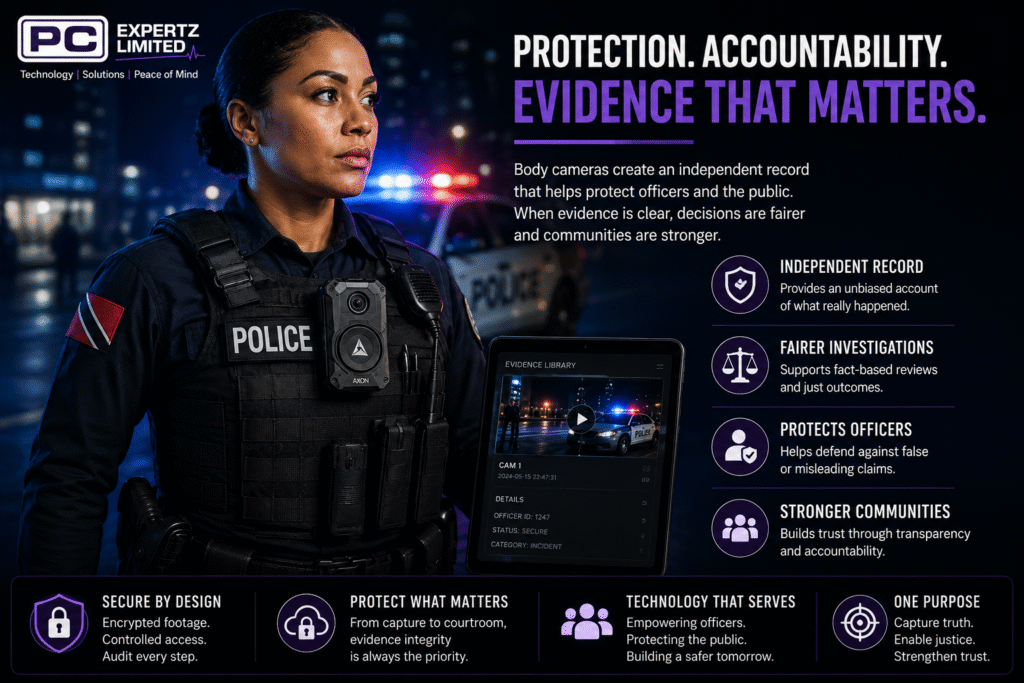 Body Cameras Can Support Better Reviews
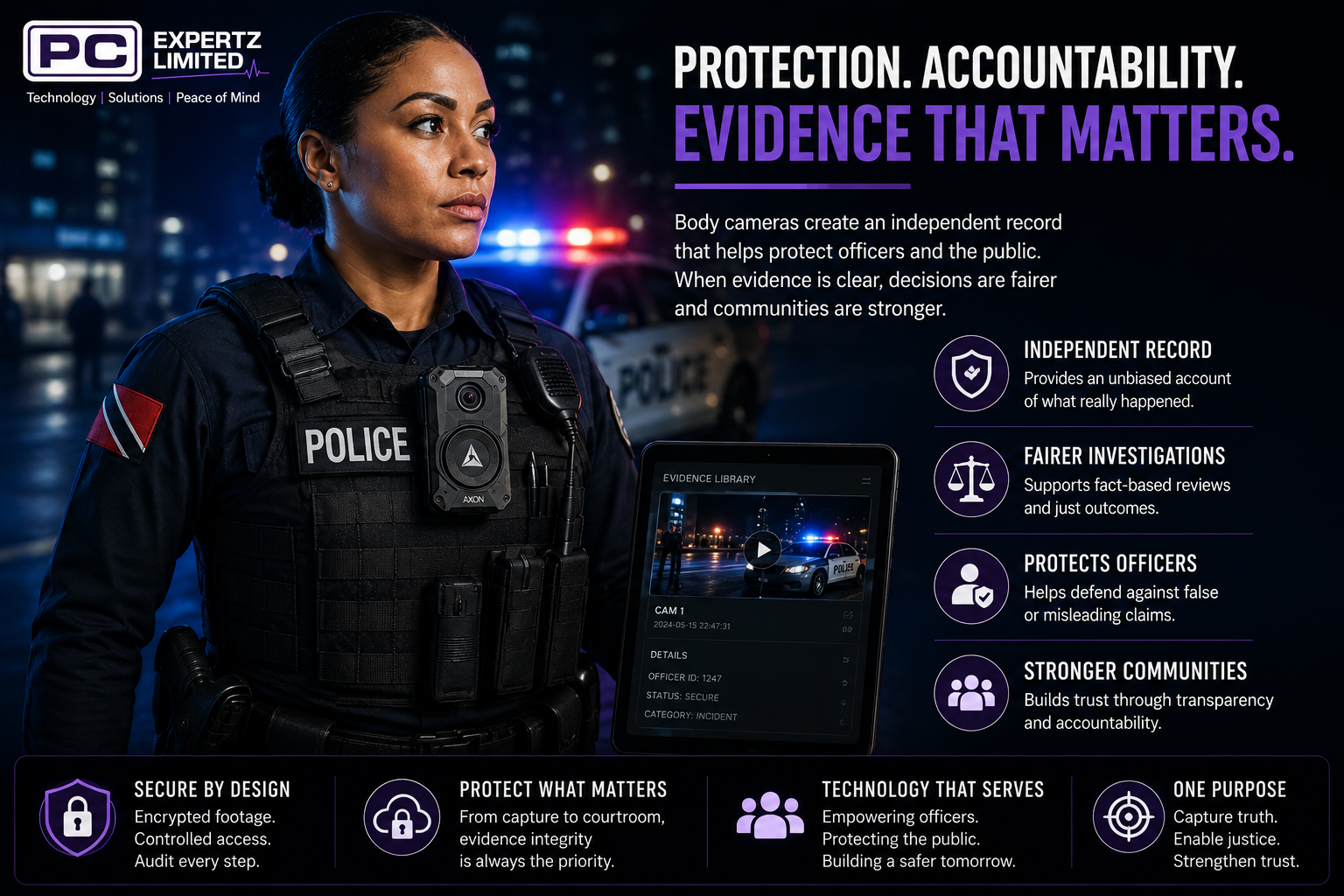
Body-camera footage can also help supervisors understand incidents after they occur. Instead of relying only on written descriptions, they may have additional information about how an encounter developed.
This can support training and operational reviews. Agencies may identify situations where officers handled an encounter well. They may also identify areas where additional training or different procedures could help.
Therefore, the value of body cameras for police officers does not begin and end with complaints. Video can also become a learning tool that helps organizations improve over time.
Technology Does Not Replace Good Policing
Body cameras are tools. They do not replace professional judgment, proper training or clear procedures.
A camera cannot prevent every difficult encounter. It also cannot guarantee that every recording will provide a complete view of an incident. Camera position, movement, lighting and other factors can affect what the footage captures.
For that reason, agencies need to consider body-camera footage alongside other available evidence. The technology works best when clear policies, proper training and effective evidence management support it.
This is another reason the wider body-camera ecosystem matters.
Accountability Can Protect Both Sides
Public discussions about body cameras sometimes present accountability as something that applies only to officers. In practice, reliable evidence can serve a broader purpose.
When the evidence supports a complaint, investigators have information they can examine. When the evidence supports an officer’s account, the same principle applies.
That balance is important.
The purpose of a body-worn camera should not be to automatically support one side of an encounter. Its value comes from creating another reliable source of evidence when people need to establish what happened.
Building Confidence Through Evidence
For Trinidad and Tobago, body-worn cameras can form part of a broader conversation about technology, evidence and public confidence.
Officers need confidence that technology can provide an accurate record of their actions. Members of the public need confidence that authorities will manage recordings properly and review them fairly when necessary.
Secure technology and sound policies can help support both objectives.
That is why body-worn camera programmes involve more than cameras. Evidence management, cybersecurity, training, access control and policy all contribute to the credibility of the overall system.
Can Body Cameras Protect Police Officers?
Yes, they can.
A body-worn camera can provide an independent digital record when an officer’s actions come into question. It can add context, assist investigations and help address allegations that available evidence does not support.
However, the strongest body-camera programmes should not view this protection as competing with public accountability. The same reliable evidence can support both.
When people can trust the evidence, accountability can protect the public and the officer wearing the camera.
In the next article in our PC Expertz Public Safety Technology Series, we will examine “From Body Camera to Courtroom: Can You Trust the Digital Evidence? Chain of custody, audit trails, integrity and evidential value”.
Navigation Links
Part 1: Body Cameras Are Changing Public Safety. But the Camera Is Only Half the Story.
Part 2: What Happens to Body-Camera Footage After an Officer Stops Recording?
Part 3: Can Body Cameras Protect Police Officers Too?
Part 4: From Body Camera to Courtroom: Can You Trust the Digital Evidence?
Part 5: What Happens When Thousands of Hours of Body-Camera Video Start Piling Up?
Part 6: AI and Body Cameras: The Next Stage of Digital Evidence
Part 7: What Should Trinidad & Tobago Expect From a Modern Body-Worn Camera Programme?
WhatsApp: +1 (868) 798-9762
Email: admin1@pcexpertz.com
Website: pcexpertz.com