
Body Cameras Are Changing Public Safety. But the Camera Is Only Half the Story.
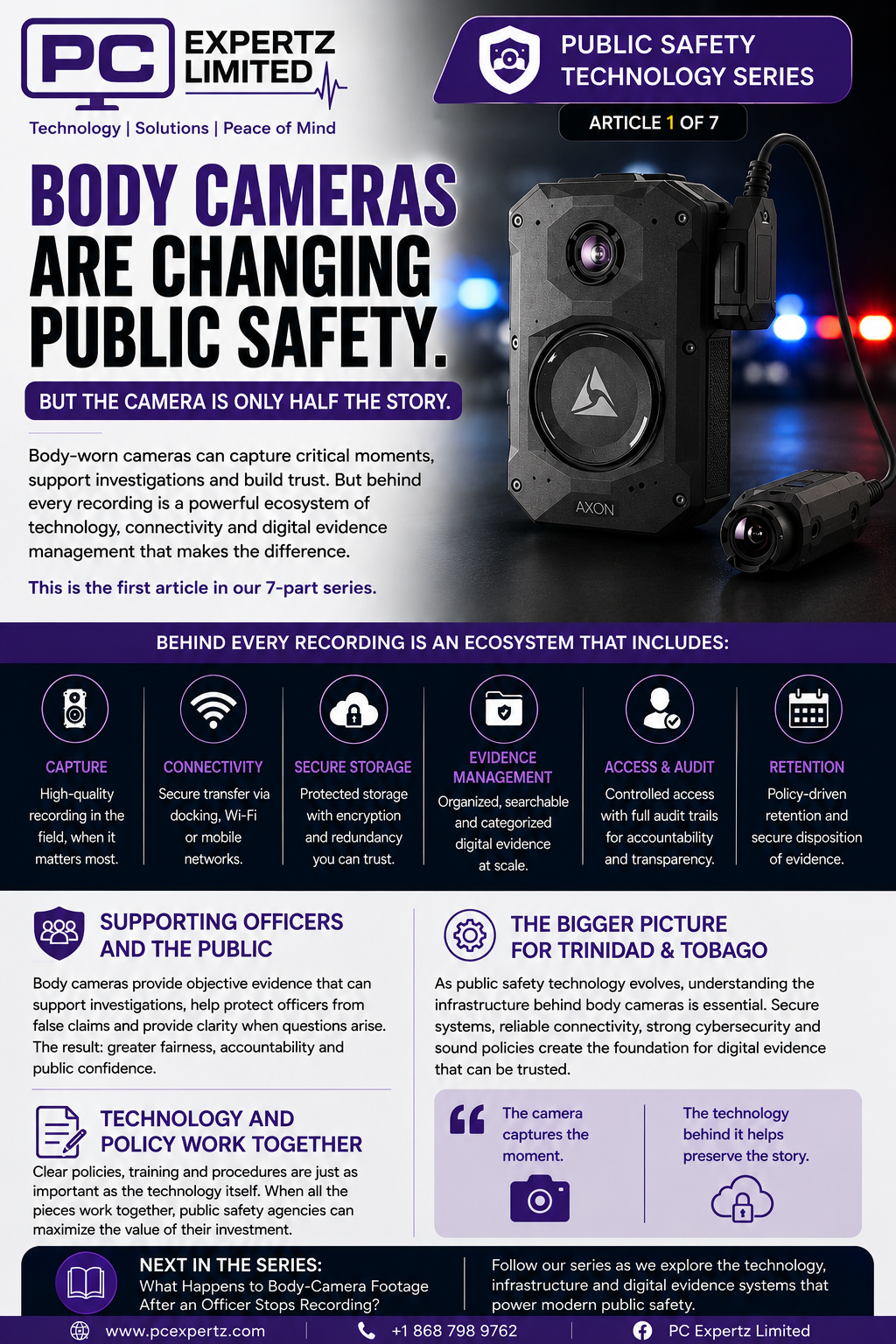
This is the first article in the PC Expertz Public Safety Technology Series. In this series, we explore the technology, infrastructure and digital evidence systems behind modern public safety. We begin with one of the most visible technologies in modern policing: the body-worn camera.
Body-worn cameras now play an important role in modern public safety technology. They can create a digital record of encounters and support investigations. They can also contribute to greater transparency for law enforcement officers and members of the public.
However, while we see the camera, a much larger technology ecosystem operates behind it. Most people naturally think about video quality, battery life, durability and recording time. Those specifications matter, but recording an incident is only the beginning. What happens to that recording afterwards matters just as much.
What Happens After the Recording?
Once a camera captures footage, that footage becomes digital evidence. The supporting systems must transfer, store and manage it securely. Authorized personnel must also have access when they need it.
Agencies also need clear processes for managing sensitive footage. These processes determine who can access recordings and how long the system keeps them.
As agencies deploy more body-worn cameras, they also create more digital evidence. Therefore, the systems that manage this information become an important part of the overall programme. A modern body-worn camera programme involves much more than cameras. It also requires an effective digital evidence environment.
Connectivity Is Part of the System
Modern body-worn camera technology also depends on communications infrastructure. Depending on the system, docking stations, secure Wi-Fi or mobile networks can transfer recordings. These technologies move evidence from the field into a secure management environment.
Reliable connectivity therefore plays an important role in the process. The system must do more than record an incident. It must also move that recording efficiently and securely to the people who need it.
As public safety technology becomes more connected, these systems increasingly work together. Cameras, communications networks and evidence-management platforms now form parts of a larger technology ecosystem.
Protecting Digital Evidence
Body-camera footage can contain sensitive information. For this reason, cybersecurity and access control form an important part of the discussion. Digital evidence systems can restrict access to authorized users. They can also record activity associated with the evidence.
These controls become particularly important during investigations or legal proceedings. Knowing that a camera recorded an incident is only one part of the process. Agencies also need confidence in how their systems handled that recording afterwards.
Access controls, audit trails and evidence-integrity safeguards can help build that confidence. Together, these technologies support evidence throughout its lifecycle. They help protect it from the moment of capture through its eventual use or retention.
Supporting Officers and the Public
People often discuss body-worn cameras in the context of accountability. However, their potential value extends beyond any single perspective. A reliable video record can provide additional context when people review an incident.
Video can also assist investigators and help clarify questions about an encounter. As a result, body-worn cameras can benefit law enforcement officers and members of the public.
Human recollections can differ, especially during stressful or fast-moving situations. Video provides another source of information when investigators need to determine what occurred.
Therefore, body-worn camera technology offers more than a way to record events. It can create a reliable record that people can review when questions arise.
Technology and Policy Work Together
Even sophisticated technology needs clear policies and procedures. Policies can establish when officers activate cameras and how they classify recordings. They can also define who may access footage and how long the system keeps different types of evidence.
Training plays an equally important role. Officers and other authorized personnel need to understand the equipment and the procedures that govern its use.
Technology, connectivity, digital evidence, cybersecurity, training and policy must therefore work together. Each component contributes to the effectiveness of the overall system.
This broader approach matters because camera specifications alone cannot determine the success of a body-worn camera programme.
The Bigger Picture for Trinidad and Tobago
As public safety technology evolves, understanding the infrastructure behind body-worn cameras becomes increasingly useful. In Trinidad and Tobago, the conversation can extend beyond the camera we see on an officer’s uniform. We can also understand the technology operating behind it.
Secure evidence management, reliable connectivity, controlled access and appropriate policies all support the wider body-worn camera ecosystem. Understanding this bigger picture also shows how much technology can sit behind one relatively small device.
This area will continue to evolve. Advances in connectivity, cloud infrastructure, cybersecurity and artificial intelligence will create new possibilities for managing digital evidence.
The Camera Is Only Half the Story
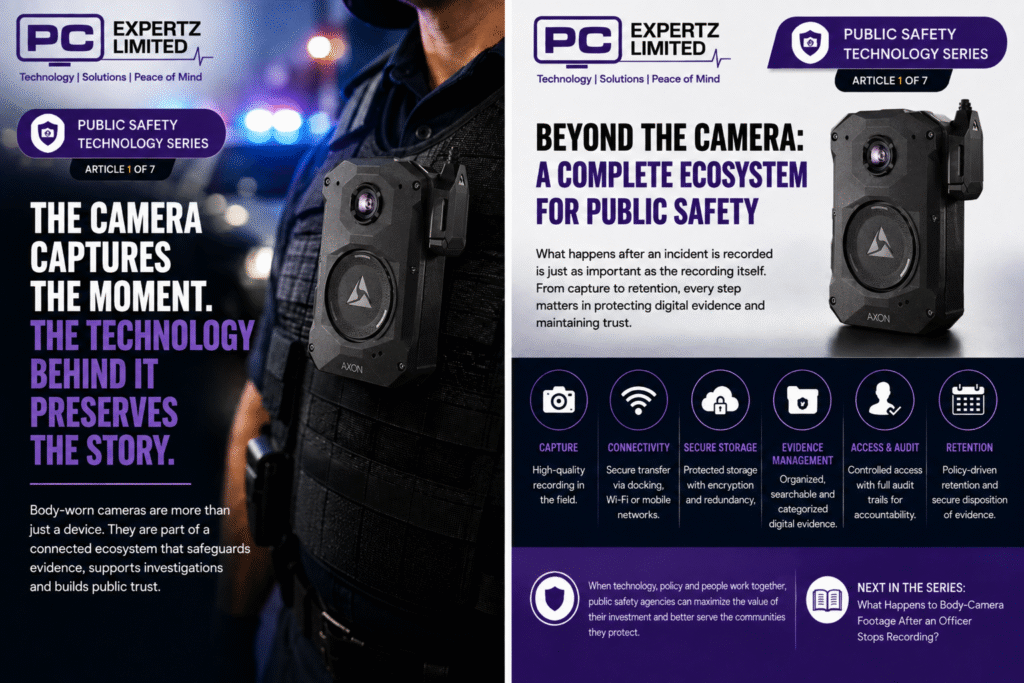
The body-worn camera may be the most visible part of the system. However, much of the technology operates behind the scenes. After an incident occurs, several systems can transfer, protect, manage and retrieve the resulting digital evidence.
That is why modern body-worn camera technology involves much more than recording video. The camera captures the moment, while the technology behind it helps preserve the story.
In the next article in our PC Expertz Public Safety Technology Series, we will follow that evidence further. We will look at what happens after an officer stops recording and how technology manages the resulting footage.
Navigation Links
Part 1: Body Cameras Are Changing Public Safety. But the Camera Is Only Half the Story.
Part 2: What Happens to Body-Camera Footage After an Officer Stops Recording?
Part 3: Can Body Cameras Protect Police Officers Too?
Part 4: From Body Camera to Courtroom: Can You Trust the Digital Evidence?
Part 5: What Happens When Thousands of Hours of Body-Camera Video Start Piling Up?
Part 6: AI and Body Cameras: The Next Stage of Digital Evidence
Part 7: What Should Trinidad & Tobago Expect From a Modern Body-Worn Camera Programme?
WhatsApp: +1 (868) 798-9762
Email: admin1@pcexpertz.com
Website: pcexpertz.com